
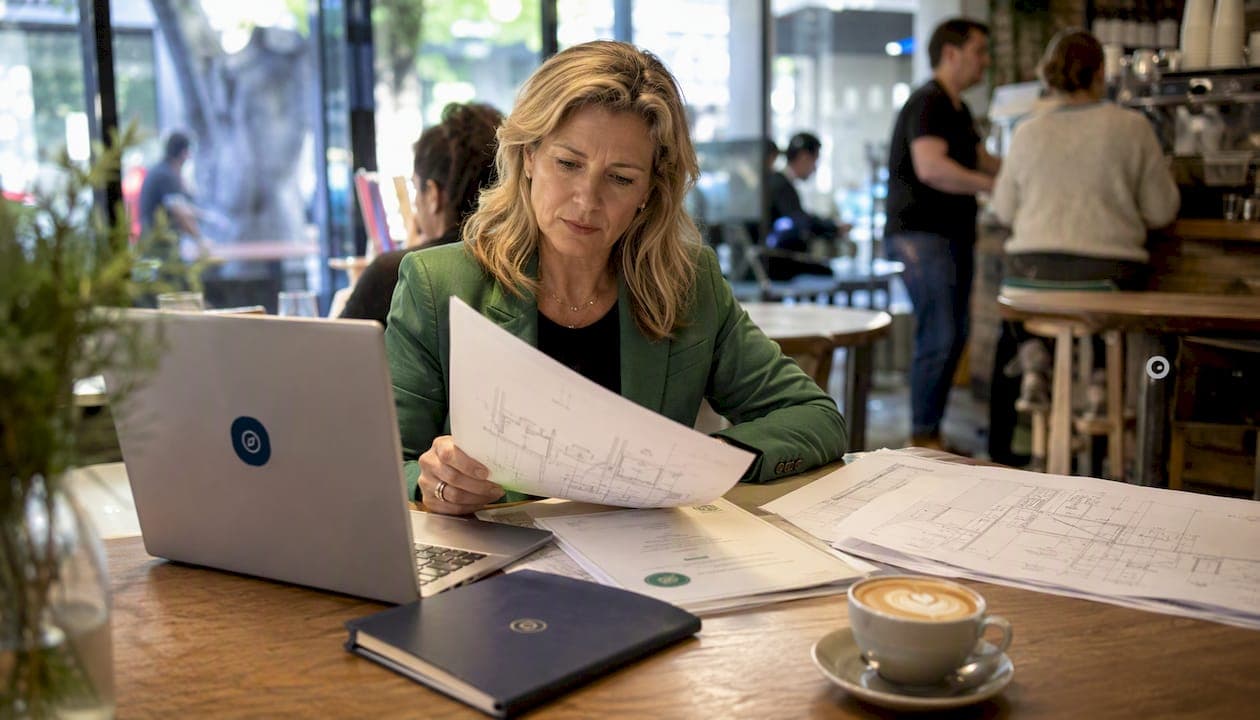
For most Sydney renovations — a rear extension, granny flat, or garage conversion on a standard block — an experienced building designer is the faster, more cost-effective choice. Hire an architect when your site carries a heritage overlay, sits in a flood or bushfire zone, has a steep slope, or involves major structural change. Those conditions push you into merit-based Development Application territory where an architect's training and council advocacy genuinely earn their higher fee.
Table of Contents
- Architect vs building designer: what the law actually says in NSW
- Navilot helps you find your approval path before you spend on design fees
- Key Takeaways
Architect vs building designer: what the law actually says in NSW
In NSW, the title "architect" is legally protected — only individuals registered with the NSW Architects Registration Board may use it. The Board maintains a public register you can search before signing anything. "Building designer" carries no equivalent protection. Quality and qualifications vary widely, from diploma-trained drafters to practitioners with near-architectural credentials.
Both professionals can prepare and lodge Development Applications (DA) and Complying Development Certificates (CDC) with Sydney councils. The practical difference shows up on complex sites: architects are routinely engaged for heritage conservation areas, flood-prone blocks, and steep terrain because their training covers the council advocacy those assessments demand.
How fees and scope actually differ
Architect fees typically run 8–15% of construction cost for end-to-end service, which usually includes design, documentation, DA or CDC lodgment, and contract administration during the build. Building designers commonly charge fixed fees or lower percentages in the 3–8% range, often scoped to documentation only. That gap narrows fast if a council-requested redesign forces a second round of drawings — a risk that rises sharply on constrained sites.

Before you hire either professional, clarify in writing: who runs the tender, who does contract administration, and who handles variations. Leaving those questions open is the most common source of disputes once construction starts.
| Dimension | Architect | Building designer |
|---|---|---|
| Legal/registration status | NSW Architects Registration Board registered; title protected | Title not protected in NSW; qualifications vary |
| Typical scope | Design through contract administration | Design and documentation; contract admin varies |
| Fee model | Percentage of construction cost | Fixed fee or lower percentage of construction cost |
| Best-fit project types | Heritage, complex structural, steep/flood/bushfire sites | Standard extensions, granny flats, CDC-eligible work |
| Council approval experience | Stronger on merit-based DA and heritage assessments | Effective for CDC and straightforward DA submissions |
| Construction involvement | Typically full contract administration | Often documentation-only unless scope is extended |
Three questions to settle the choice right now
- Does your site carry an overlay? Check your property on the NSW Planning Portal for heritage, flood, or bushfire flags. Any one of those usually means an architect.
- How complex is the structural change? Removing load-bearing walls, adding a second storey, or altering a heritage facade requires the higher-level technical documentation architects are trained to produce.
- Do you want someone on-site through construction? If yes, confirm that contract administration is in the written scope — and budget for it. A building designer scoped to documentation only hands off once the approval lands.
Before engaging anyone, request: proof of NSW registration (for architects), copies of DA or CDC approval numbers from comparable projects, professional indemnity and public liability insurance certificates, and a written scope with a fixed fee or clear percentage basis. Understanding the home renovation stages explained can also help set realistic timing expectations and prepare the necessary paperwork throughout your project. A portfolio of council-approved projects is the single most practical trust signal for either professional.
Navilot helps you find your approval path before you spend on design fees
Choosing the wrong professional for your approval pathway is one of the most expensive mistakes Sydney homeowners make. Navilot cuts that risk before it costs you anything significant.
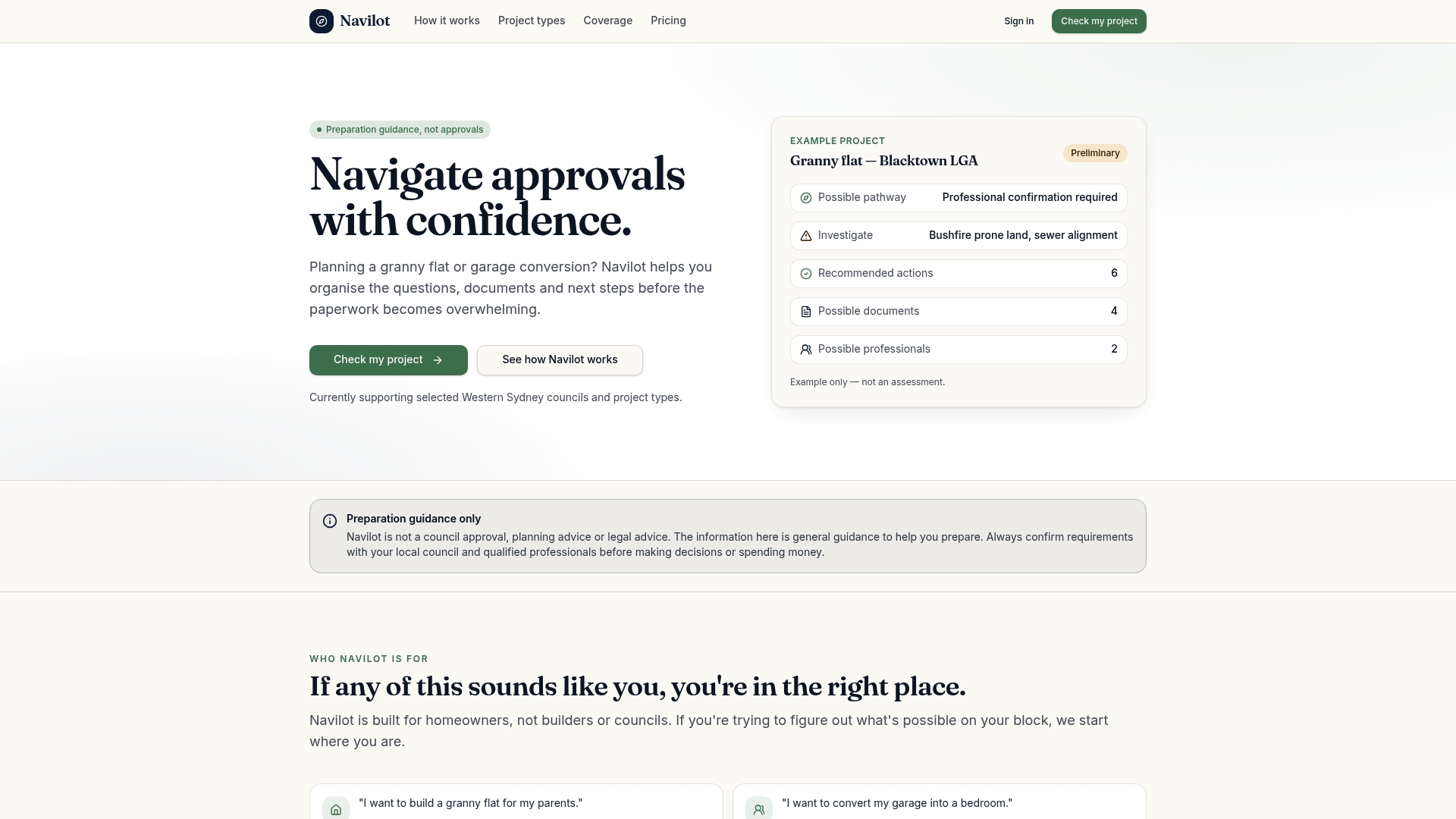
Run a free project check on your property and proposed work. Navilot identifies whether your project is likely CDC-eligible or DA-bound, lists the documents and reports your council will expect, and produces a tailored preparation roadmap. The detailed roadmap costs $49 and covers Sydney councils and common project types including granny flats, extensions, and garage conversions. Navilot does not lodge council applications — it organizes your preparation so you walk into any professional engagement already knowing what you need.
Pro Tip: Before your first meeting with a designer, pull together any previous DA or CDC approval numbers for your property. Professionals can use that history to assess council precedent and price your job more accurately.
Start with the free project check and know your path before you commit to design fees.
Key Takeaways
For most Sydney renovations, an experienced building designer on a fixed fee is the practical choice; an architect becomes necessary when site overlays or structural complexity push the project into merit-based DA territory.
| Point | Details |
|---|---|
| "Architect" is a protected title | Only NSW Architects Registration Board registrants may legally use the title; verify before hiring. |
| Fee gap reflects scope | Architects charge a percentage of construction cost; building designers typically charge a fixed fee or lower percentage. |
| Both can lodge DA and CDC | Either professional can submit to Sydney councils; architects are stronger on complex or heritage assessments. |
| Site overlays drive the decision | Heritage, flood, or bushfire overlays usually require an architect's higher-level council advocacy. |
| Navilot clarifies your path first | A $49 Navilot roadmap identifies your likely DA or CDC pathway before you pay for full design services. |